
Hosting a gathering should feel like an opportunity to connect with people you love, not a source of anxiety that keeps you up at night. Between coordinating food, comfort, and cleanup, it is easy for a simple get-together to spiral into a stressful production. The good news is that with a little forethought, you can host a relaxed, enjoyable event without running yourself ragged. This guide walks through practical steps homeowners can take to plan a gathering that feels effortless, even if a lot of work happens behind the scenes.
Start With a Realistic Plan and Guest List
Before you think about decorations or menus, get clear on the basics: who is coming, how many people you can comfortably host, and what kind of event you actually want to throw. A backyard barbecue for fifteen close friends requires very different planning than a holiday dinner for extended family. Write down your guest count early because it drives nearly every other decision you will make, from seating to food quantities.
Give yourself more lead time than you think you need. Rushed planning is one of the biggest sources of party stress, and a two to three week runway lets you handle surprises without panic.
- Confirm your guest count at least two weeks in advance
- Decide on a theme or occasion to guide decisions
- Set a realistic budget before shopping or booking anything
- Create a simple timeline for setup, the event itself, and breakdown
Get Your Home Comfortable Before Guests Arrive
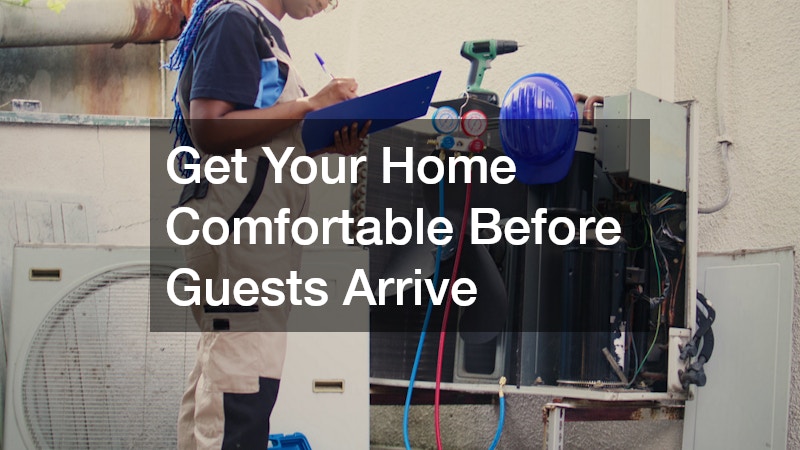
Nothing derails a gathering faster than a home that is too hot, too cold, or just uncomfortable. If your system has been acting up, schedule HVAC repairs well before your event date rather than waiting until the week of, since technicians often book up during busy seasons like the holidays. A quick call two to three weeks ahead gives you enough buffer to secure an appointment and order parts if needed, especially if your unit is older or hasn’t been serviced in over a year.
A properly functioning system keeps a crowded living room from turning stuffy and keeps guests from huddling in coats near the door. Remember that a room full of people naturally runs warmer than an empty one, so you may want to set the thermostat two to four degrees cooler than usual before everyone arrives. If you’re hosting more than fifteen people, consider lowering it even further about an hour before guests show up, since body heat and extra cooking activity can raise the room temperature faster than expected.
Simple maintenance steps can also prevent last-minute surprises. Changing the air filter, checking vents and returns for blockages from furniture or rugs, and testing the thermostat batteries are all quick tasks that take less than thirty minutes combined. It’s also worth peeking at your circuit breaker panel to confirm nothing is close to tripping, particularly if you’ll be running extra lighting, slow cookers, or space heaters during the event.
Don’t overlook smaller comfort details either. Ceiling fans on a low setting can keep air moving in crowded rooms without creating a noticeable draft, while a portable heater near seating areas can help if your gathering spills onto a chilly porch or patio. If your event includes an outdoor component, consider adding a couple of extra outdoor extension cords for heaters or string lights so you’re not scrambling to rearrange furniture around a single outlet.
Taking care of these details in advance means you can focus on your guests instead of fiddling with the thermostat mid-party. A comfortable home sets the tone before a single word of small talk is exchanged, and it’s one less thing to worry about once the doorbell starts ringing.
A house full of guests puts real strain on your HVAC system, and it usually shows up as uneven temperatures, stuffy rooms, or a thermostat that can’t seem to catch up. If your current setup struggles to keep up with a full house, it may be worth evaluating whether a heat pump could serve your home more efficiently year-round. Unlike older furnaces or window units, heat pumps adjust output based on real-time conditions, which matters when a living room suddenly holds twice its usual number of people.
Heat pumps are especially useful for homeowners who host in both warmer and cooler months, since they handle heating and cooling without needing separate systems. A single unit that transitions smoothly between a chilly holiday dinner and a warm summer barbecue means one less thing to plan around. Many newer models also include zoning features, so you can direct more airflow to a crowded dining area while easing off in empty bedrooms.
A quick consultation with a technician can tell you whether your current equipment is up to the task of hosting a crowd comfortably. They can check whether your system is properly sized for your square footage, since an undersized unit will always feel overworked no matter how well it’s maintained. This is also a good time to ask about routine upkeep, like filter changes or duct sealing, that can improve performance before your next gathering.
- Schedule a maintenance check two to three weeks before the event, giving technicians time to order parts if repairs are needed
- Ask about filter replacement if you have not done it recently; a clogged filter forces your system to work harder and can leave rooms stuffy with a crowd
- Consider a heat pump upgrade if your system struggles with temperature swings, especially in rooms that run hot or cold depending on the season
- Have the technician check refrigerant levels and duct airflow, since uneven cooling often traces back to these issues rather than the thermostat itself
- Test your thermostat settings a day before guests arrive, running both heating and cooling modes to confirm they respond correctly
- Set your thermostat a degree or two cooler or warmer than usual, since a house full of guests changes the room’s temperature faster than an empty one
Decide Between Home-Cooked Meals and Outside Help

One of the biggest stress points in party planning is food, and deciding early whether you will cook yourself or bring in help changes everything downstream. For larger gatherings, food catering takes the pressure off entirely, letting you focus on your guests instead of standing over a stove all day. Many local restaurants also offer catering packages or family-style trays that can be picked up or delivered, which is a great middle ground between cooking from scratch and hiring a full catering team.
When choosing between these options, think honestly about your schedule and kitchen space. If you only have one oven and twenty guests, outside help is often the smarter choice, both for your sanity and for food safety reasons tied to keeping dishes at proper temperatures.
- Get quotes from at least two catering options before committing, comparing price per person, menu variety, and service style
- Ask local restaurants if they offer party-sized portions or off-menu catering trays for gatherings
- Confirm delivery or pickup times that fit your event schedule, building in a 30-minute buffer for traffic or prep delays
- Always have a backup plan in case of last-minute cancellations, like a secondary restaurant or a few freezer-friendly dishes on hand
- Weigh cost versus convenience: home-cooked meals save money but demand more time and effort, while outside help frees you up to enjoy the event
Explore Fun Food Options That Guests Love

Crowd-pleasing food goes a long way toward making a gathering feel relaxed and festive. Mexican food is consistently popular at casual gatherings because it is easy to serve buffet-style and works for nearly every dietary preference with simple swaps. Guests who avoid gluten can skip the tortillas for a rice or lettuce base, and vegetarians can load up on beans, rice, and grilled veggies without feeling like an afterthought.
Setting up a taco bar with a few protein options, fresh toppings, and warm tortillas lets guests build their own plates, which cuts down on serving time for you. A good rule of thumb is one main protein per 6-8 guests, so two options like seasoned chicken and ground beef usually cover a group of 12-16 comfortably. Round out the spread with rice, refried beans, and a simple salsa bar featuring mild, medium, and spicy varieties so everyone can adjust to their own taste.
Prepping components ahead of time also makes this option especially stress-free for the host. Rice, beans, and shredded meats can be made a day in advance and reheated in a slow cooker right before guests arrive, freeing you up to focus on setup instead of last-minute cooking.
Tacos in particular are an easy win for hosts who want variety without complicated prep. A simple taco bar built around two proteins—say seasoned ground beef and shredded chicken, or a vegetarian option like spiced black beans—covers most dietary preferences without doubling your cooking time.
Round that out with three or four salsas (mild, medium, spicy, and maybe a fruit-based salsa for contrast), plus rice and beans on the side, and guests will feel like they have plenty of choices even though your workload stayed manageable. Set out shredded cheese, diced onions, cilantro, and lime wedges so people can customize their own plate, which cuts down on special requests during the party.
Best of all, most of this can be prepped a day ahead: proteins can be cooked and refrigerated, salsas often taste better after resting overnight, and toppings just need chopping the morning of the event. That means on the day of the gathering, you’re reheating and arranging rather than cooking from scratch, leaving more time to actually enjoy your guests.
- Offer at least two protein options for dietary variety
- Include a vegetarian filling like seasoned beans or grilled vegetables
- Set out salsas with varying spice levels
- Keep tortillas warm in a slow cooker or wrapped in foil
Consider Food Trucks for Casual Gatherings

For larger or more casual outdoor events, food trucks can solve the food problem entirely while adding a fun, festive element to your gathering. Instead of worrying about serving dishes, keeping food warm, or running out of plates, you let the truck handle everything from cooking to cleanup of their own station. This works especially well for backyard parties, milestone birthdays, or neighborhood get-togethers where guests can mingle while waiting in a short line.
Most trucks require a minimum guest count or a flat booking fee, often ranging from $500 to $1,500 depending on the menu and event length, so it’s worth requesting quotes from two or three vendors before committing. Popular options include taco trucks, wood-fired pizza vendors, and gourmet burger trailers, but many cities now also offer specialty trucks for barbecue, Mediterranean fare, or even dessert and ice cream service.
Before booking, confirm a few practical details: does the truck need a dedicated parking spot with power access, how long is their average service window for your expected guest count, and do they carry their own liability insurance. It’s also smart to ask about backup plans for rain or extreme heat, since many trucks operate best in open-air conditions.
Booking six to eight weeks in advance is usually enough for casual gatherings, though weekend dates during peak summer months can fill up faster. If your guest list includes children or guests with dietary restrictions, ask the vendor about kid-friendly portions or gluten-free and vegetarian options ahead of time so nobody feels left out.
- Book food trucks at least three to four weeks ahead for weekend dates, since popular vendors fill up fast during peak seasons
- Confirm power and space requirements with the operator, including whether they need a generator hookup or a level 20-foot parking spot
- Ask about menu customization for dietary restrictions like gluten-free, vegan, or nut-free options
- Check the truck’s minimum guest count and service time window, usually two to three hours
- Have a backup indoor plan in case of bad weather, such as a covered patio or garage space
- Request proof of insurance and local permits to avoid last-minute scheduling issues
Prepare Your Space for Comfortable Seating
Guests need somewhere comfortable to sit, chat, and relax, so take stock of your furniture before the big day. If your sofas or dining chairs are looking worn, investing in furniture upholstery ahead of a big event can make your living space look refreshed without the cost of buying entirely new pieces. This is also a good time to check for wobbly chairs or stained cushions that might embarrass you mid-party.
Think about traffic flow as much as seating capacity. Arrange furniture so people can move easily between the kitchen, seating areas, and any outdoor space, since cramped pathways tend to create bottlenecks near food and drinks.
- Repair or reupholster worn seating at least a week in advance
- Add extra folding chairs for overflow seating
- Group seating in small clusters to encourage conversation
- Keep pathways clear near entrances and food tables
Make Sure Everyone Has Access to Clean Water
With a house full of guests, tap water usage spikes quickly, so it is worth checking that your drinking water system is up to the task before the event. Run a quick test glass a day or two beforehand to check taste and clarity, especially if the house has been quiet for a while and water has been sitting in the lines.
A filter that has not been changed in a while can affect taste right when you need your water pitchers looking their freshest. Most standard filter cartridges are rated for two to three months or a set number of gallons, so check the indicator light or manufacturer guidelines rather than guessing.
If you rely on a filtered pitcher or under-sink system, replace cartridges a few days ahead so everything runs smoothly during the party itself. This also gives you time to flush the new filter and run a few test batches, so the first pitcher you serve guests is already at its best.
- Replace water filters 3–5 days before the event so any initial “new filter” taste or cloudiness has time to settle
- Set out labeled pitchers for still and sparkling options, plus one for infused water (lemon, cucumber, or mint) as a refreshing alternative
- Keep extra ice on hand for warmer months — plan for about 1 pound of ice per guest, and stash a backup bag in the freezer just in case
- Have a few extra reusable cups or glasses ready so no one has to hunt for a clean one mid-party
- Test water flow and taste the day before guests arrive, running the tap for 30 seconds first to clear out any stagnant water
- Check that dispensers or coolers are fully cleaned and rinsed to avoid any leftover soap taste
Plan for Post-Party Cleanup
Cleanup is often the part of hosting that people dread most, but a little planning beforehand makes it far less overwhelming. For larger events, especially ones involving yard work, decorations, or furniture rearranging, local dumpster rentals can be a practical way to handle bulk waste without overflowing your regular trash cans. This is particularly helpful if you are also clearing out old furniture or yard debris while prepping your space for guests.
Even for smaller gatherings, setting up designated bins for recycling, compost, and trash during the event itself saves you from sorting through a mountain of mixed waste afterward. Label bins clearly so guests can help without asking where things go.
- Reserve local dumpster rentals early if you are doing a major cleanout beforehand
- Set out clearly labeled bins during the event
- Break down boxes and packaging as you go
- Schedule a follow-up trash pickup if needed after a large event
Set the Mood With Ambiance and Entertainment
Food and comfort matter, but atmosphere is what guests actually remember. Simple touches like warm lighting, a curated playlist, or a few games can transform a gathering from ordinary to memorable without much extra effort. You do not need elaborate decor; consistency in a color scheme or a few thoughtful centerpieces often makes more impact than trying to do too much.
- Use dimmable lighting or string lights for a relaxed feel
- Prepare a playlist in advance rather than scrambling during the event
- Add one or two simple games for mingling
- Keep decor consistent rather than overly elaborate
Memorable gatherings do not require perfection, just enough preparation to keep the important details from becoming last-minute emergencies. By addressing comfort, food, seating, and cleanup ahead of time, you free yourself up to actually enjoy the event you worked so hard to plan. Start with the areas most likely to cause stress in your specific home, whether that is your HVAC system, seating, or food logistics, and build outward from there. With a solid plan in place, you can host with confidence and actually be present for the moments that matter.