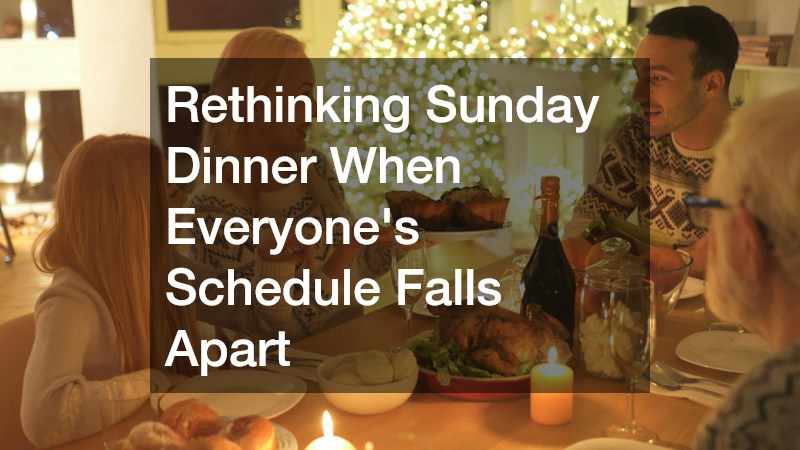

Sunday dinner used to be an anchor. A fixed point in the week when family members gathered without much negotiation. That version of the tradition still exists in some households, but for many families, the classic 6 p.m. Sunday roast has become an increasingly difficult promise to keep. Work schedules bleed into weekends, kids have travel sports, teenagers have jobs, and the adults who used to host are busier than ever. The question worth asking is not how to restore the old ritual exactly — it’s how to preserve what the ritual was actually for.
What You’re Really Trying to Save
The impulse to “fix” Sunday dinner usually focuses on the wrong thing. Families chase the form — the specific day, the full table, the elaborate meal — when what they’re actually trying to protect is connection, predictability, and a shared experience that doesn’t feel rushed. Research from the National Center on Addiction and Substance Abuse at Columbia University found that teens who shared frequent family meals reported stronger relationships with parents and better outcomes across several health measures. The frequency mattered more than the formality.
That finding shifts the question considerably. If the goal is regular connection over a shared meal, then Sunday dinner doesn’t have to mean Sunday, and it doesn’t have to mean dinner. A rotating Friday lunch, a standing Saturday breakfast where someone makes eggs from scratch — these accomplish the same thing. The ritual is the container; the connection is what lives inside it.
Before abandoning the Sunday tradition entirely or fighting to preserve it exactly as it was, it helps to identify which part of the original ritual your family actually misses. For some households, it’s the cooking itself — the process of preparing something from scratch together. For others, it’s the absence of screens, or the fact that nobody was rushing to be somewhere else. Knowing which element carries the most meaning changes what kind of replacement actually works.
Adapting the Format Without Losing the Feeling

Once a family accepts that the format can change, several practical structures emerge — each with real trade-offs.
The most common pivot is moving from a full cooked meal to a “drop-in window.” Instead of requiring everyone at the table at 6 p.m. sharp, the kitchen is stocked and open from 4 to 7 p.m. Food is prepared in advance — often a slow cooker dish, a sheet pan meal, or a large pot of something — and family members eat when they arrive. This works well for households with staggered schedules, but it sacrifices the shared table moment entirely. If the conversation was the point, this format misses it.
A tighter alternative is the 45-minute commitment model: everyone agrees to be present for a single 45-minute window, even if they arrived late from a game or have to leave early for work. The meal is simple by design — think tacos with prepped components, a grain bowl bar, or a pre-assembled pasta bake — so no one person carries the full preparation burden. The shared window is protected; the elaborate cooking is not.
Some families go further and rotate the day entirely, moving Sunday dinner to whichever evening works best that week. This requires more coordination but often produces more genuine attendance. A Tuesday night where everyone shows up beats a Sunday where half the table is distracted or absent.
For nights when cooking isn’t realistic at all, takeout can fill the gap without abandoning the ritual — the best restaurants in your area often handle large family orders well if you call ahead rather than ordering through an app, which tends to reduce errors on complex orders.
Streamlining the Cooking Without Losing Quality
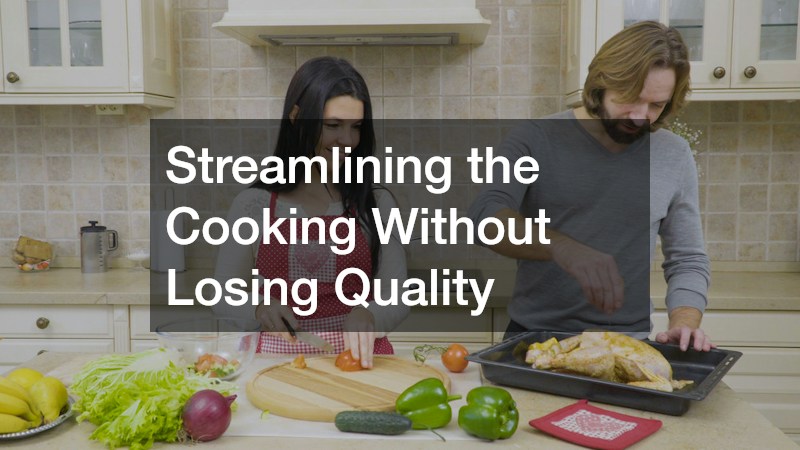
The other pressure point is the meal itself. Elaborate Sunday dinners — braised meats, multiple sides, homemade dessert — made more sense when one adult had a full Sunday afternoon free. That’s less common now, and the solution isn’t to lower standards across the board. It’s to be strategic about where effort goes.
Batch cooking on Saturday, even for just 90 minutes, can make Sunday feel entirely different. Roast a large chicken Saturday afternoon and Sunday’s meal becomes chicken tacos, a quick soup, or a salad with carved meat — requiring almost no active cooking. The same logic applies to grains: a pot of farro or brown rice cooked in advance turns into three different meals depending on what’s added.
Consider the difference between meals that require active attention and those that don’t:
- Use a slow cooker for proteins that need 6-8 hours of cook time, set before anyone leaves in the morning — pulled pork shoulder and chicken thighs in broth both work well with minimal prep.
- Build one “anchor component” each week — a roasted vegetable, a cooked grain, or a marinated protein — and treat it as the base for whatever format Sunday takes.
- Keep a 20-minute backup meal stocked at all times: dried pasta, canned tomatoes, olive oil, and parmesan cover most emergencies without a grocery run.
The meals that tend to survive chaotic schedules best are ones with high tolerance for timing — dishes that hold well at low heat, that improve with sitting, or that require minimal last-minute coordination.
Managing the Expectations That Derail Everything
Schedules are rarely the only obstacle. Often, the real friction comes from mismatched expectations about who’s responsible for planning, who has to attend, and what counts as a successful Sunday dinner. These conversations don’t happen until someone is already frustrated.
Setting a loose agreement in advance — even just a text thread where someone posts what’s happening that week and who’s coming — reduces the silent resentment that builds when one person carries all the planning while others simply show up or don’t. Assigning rotating responsibilities, even something as small as “you’re on dessert for the next three Sundays,” distributes ownership in a way that keeps the ritual feeling shared rather than managed by one person.
It’s also worth being honest about attendance. Requiring perfect attendance creates pressure that eventually makes the whole tradition feel punitive. Allowing occasional absences without guilt, while still protecting the majority of Sundays, is usually more sustainable than an all-or-nothing rule.
When the Tradition Needs a Genuine Reset
If Sunday dinner has already quietly collapsed — skipped more often than not, replaced by separate meals in separate rooms — rebuilding it takes a different approach than sustaining one that still exists.
Start smaller than feels right. One Sunday per month, protected without exception, is more durable than a weekly commitment that fails half the time. Once the habit re-establishes itself, it’s easier to increase frequency than to repair goodwill after repeated failed attempts. The goal is a tradition the household looks forward to, not one it dreads.