

Community dinners have a unique power to bring people together, bridging social gaps and fostering a sense of shared belonging over a warm meal. However, transitioning from cooking a family dinner at home to coordinating a large-scale feast for dozens—or even hundreds—of people requires a fundamental shift in mindset. A standard residential kitchen simply lacks the physical capacity, cooling power, and cooking bandwidth needed to prepare high-volume meals safely.
Moving your community event into a commercial kitchen workspace solves the capacity issue, but it introduces a whole new layer of operational complexity. These facilities are heavy-duty industrial environments designed for trained culinary personnel, equipped with high-powered appliances, complex ventilation infrastructure, and strict health codes. For event organizers, non-profit volunteers, and community leaders, navigating this environment requires careful planning. Mastering ingredient sourcing, storage logistics, equipment maintenance, fire safety, and post-event sanitation ensures that your gathering is not only memorable and nourishing, but entirely safe for everyone involved.
Sourcing Ingredients and Managing Food Prep at Scale
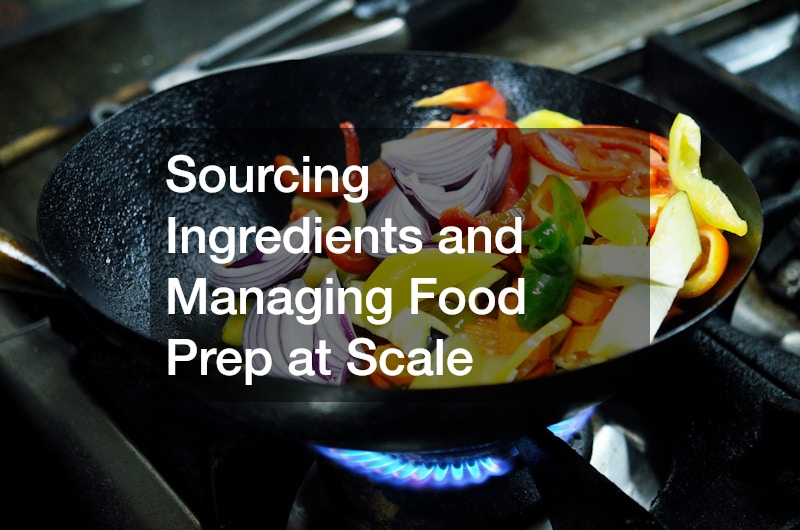
Executing a successful community meal begins long before anyone steps into the kitchen. Sourcing ingredients for high-volume preparation demands a strategic approach that balances budget, fresh flavor, and strict food safety protocols. When cooking for large groups, standard grocery store purchases become inefficient and costly. Securing bulk goods from regional farm networks and wholesale distributors allows you to stretch your budget while serving higher-quality food.
Working directly with regional growers gives community meal organizers access to fresh seasonal produce, grains, and specialty goods at wholesale volumes. Incorporating fresh agricultural products into your menu not only elevates the nutritional value of the meal, but it also supports local supply chains and builds regional resilience. When receiving bulk farm deliveries, always inspect the produce upon arrival. Ensure that items are transported in clean, temperature-controlled environments to prevent premature spoilage or contamination before prep even begins.
Protein handling requires an even higher level of scrutiny due to the rapid rate at which raw meats can develop harmful pathogens if held in the temperature danger zone—between 40°F and 140°F. When planning a large menu, establish a clear relationship with a certified commercial butcher who can supply pre-portioned, vacuum-sealed cuts tailored to your specific recipe needs. Ordering pre-trimmed proteins saves your volunteer team hours of raw prep time, drastically reducing the risk of cross-contamination across your work surfaces. Keep raw meats strictly separated from ready-to-eat ingredients during transit, and transfer them directly into cold storage as soon as they reach the facility.
- Establish dedicated prep stations for distinct tasks: one for raw protein processing, one for raw produce washing, and one for cooked or ready-to-eat assembly.
- Assign specific, color-coded cutting boards and knives to each prep station to eliminate cross-contact risks between raw meat and fresh greens.
- Schedule staggered prep shifts so volunteers are not crowding the prep tables, which can lead to accidental contamination and physical safety hazards.
- Maintain a detailed temperature log for all incoming perishable deliveries, rejecting any cold items that arrive above 40°F.
Organizing Storage and Workspace Flow
Commercial kitchens are engineered for speed, utility, and high throughput, but without organized storage and a clear physical layout, they can quickly turn chaotic during a big event. The key to maintaining control in a busy kitchen is establishing intuitive storage systems and enforcing a clean, logical flow of movement throughout the space.
When working with bulk quantities of dry goods, chopped vegetables, and prepped sauces, organization is your best defense against wasted time and food spoilage. As ingredients are prepared, transfer them immediately into commercial-grade containers that can be sealed tightly. Stacking prepped items inside a clear, date-labeled storage container helps volunteers quickly identify contents without opening lids, preserving internal temperatures and keeping food protected from environmental contaminants. Always practice the First In, First Out (FIFO) rotation method, placing older stock toward the front of shelves and newly prepped items toward the back.
Equally important is the physical traffic pattern inside the workspace. A commercial kitchen line functions like an assembly chain, and unexpected bottlenecks can lead to dropped trays, dangerous spills, or hot equipment burns. Map out explicit movement corridors using floor tape if necessary, ensuring a smooth, one-way progression from raw storage to prep, prep to the cooking line, and cooking line to the plating and serving area.
- Label every stored item with the product name, prep date, use-by date, and the name of the volunteer who prepped it.
- Keep all food products elevated at least six inches off the floor on commercial dunnage racks or shelving units, even if they are in sealed boxes.
- Maintain clear three-foot walkways throughout the kitchen, keeping exit routes, aisles, and fire extinguishers completely unobstructed by carts or crates.
- Store raw meats on the lowest shelves of walk-in refrigerators below ready-to-eat items to prevent accidental drips from contaminating prepared food.
Managing High-Volume Cooking Operations Safely
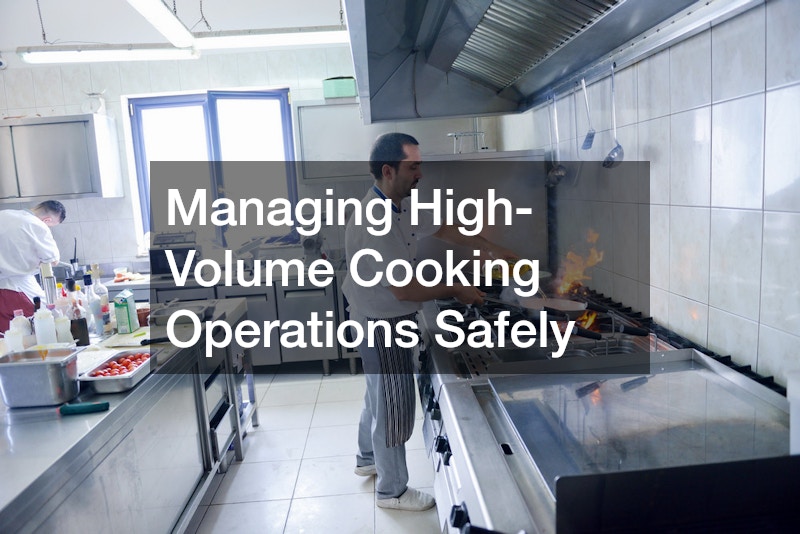
The cooking line is the heart of the commercial kitchen, where heat, speed, and volume intersect. Operating commercial fryers, tilt skillets, and six-burner ranges requires steady focus and strict adherence to safety protocols, particularly when dealing with hot fats and high-heat cooking techniques.
When executing high-heat frying or searing for large groups, select the right medium for the job. Using a stable, high-smoke-point cooking oil prevents smoke buildup in the kitchen and reduces the likelihood of flash fires on the range top. Neutral options like canola, peanut, or high-oleic sunflower oils can withstand sustained high temperatures without breaking down or transferring off-flavors to the food. Train volunteers never to overfill fryers or large pans, leaving adequate headroom to account for displacement when food is added.
Managing liquid fats does not end when the cooking stops. Large-scale cooking generates significant volumes of hot waste fat that must be handled with extreme care to prevent severe burn injuries and facility damage. Establish an explicit protocol for cooling spent grease before attempting to move it. Never pour hot fat down kitchen sinks or floor drains, as grease solidifies within plumbing lines, causing catastrophic blockages and environmental contamination. Dispose of spent grease by utilizing an approved cooking oil disposal service that provides dedicated outdoor storage caddies for safe collection and recycling.
- Keep a dedicated, rated fire blanket adjacent to all heavy frying and searing stations to smother small pan flare-ups instantly.
- Monitor oil temperatures constantly with long-stemmed commercial thermometers to prevent heating past safe smoke points.
- Never introduce wet or frozen food directly into hot fat, as the moisture will cause violent spattering and rapid oil boil-overs.
- Mandate the use of heat-resistant commercial aprons and long-sleeved oven mitts for any volunteers working directly on the hot line.
Rigorous Equipment Maintenance and Troubleshooting
Commercial kitchen appliances are heavy-duty workhorses, but they are also complex mechanical systems subject to intense wear and tear. When hosting a community meal, an unexpected equipment failure—such as a refrigeration breakdown or an oven flameout—can throw the entire event off schedule and compromise food safety. Conducting pre-event checks and understanding facility mechanics is crucial.
At least 24 to 48 hours before your event begins, perform a comprehensive walkthrough of the facility. Turn on all convection ovens, steamers, flat-tops, and holding cabinets to verify they reach and maintain their target temperatures. Check that walk-in coolers are consistently holding at 38°F or lower and freezers remain at 0°F. If you spot strange noises, temperature fluctuations, or broken ignition switches during your inspection, contact a certified appliance repair technician immediately rather than attempting DIY fixes on commercial gas or high-voltage electric units.
In addition to thermal equipment, pay close attention to the kitchen’s environmental controls. Commercial cooking generates immense amounts of heat, water vapor, grease-laden air, and combustion gases. The ventilation canopy above the cooking line works continuously to extract these byproducts from the room. Before lighting any gas appliances, inspect the overhead ventilation system and review facility records to ensure regular restaurant hood cleanings have been performed. Clean filters and grease ducts are essential for maintaining proper airflow, preventing smoke accumulation, and eliminating flammable grease buildup above active burners.
- Verify that all refrigeration units have calibrated, easy-to-read ambient thermometers placed in the warmest part of the cabinet.
- Check gas line quick-disconnect fittings to ensure they are securely locked and that safety restraint cables are firmly attached to heavy units.
- Inspect hood grease filters for heavy buildup, ensuring they are free of dripping residue before firing up appliances.
- Keep an emergency contact log on-site listing facility management, utility companies, and equipment service technicians.
Facility Fire Safety and Emergency Preparedness
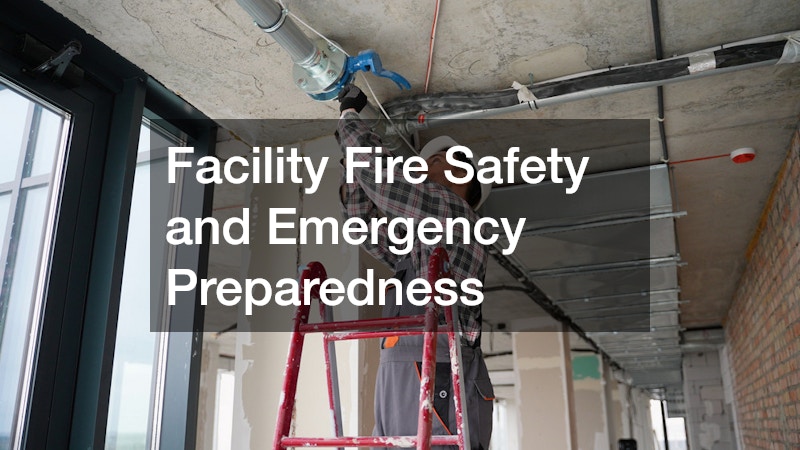
Fire safety is the absolute highest priority when operating inside a commercial culinary environment. Open flames, extremely high temperatures, electricity, and hot fats create an environment where fire risks are inherently elevated. A safe community event requires both functional safety systems and a well-trained, clear-headed volunteer team.
Commercial kitchens are protected by specialized active fire control systems designed to handle fuel sources unique to cooking environments. Over the main hot line, automatic chemical systems stand ready to blanket fryers and ranges in the event of a thermal runaway. Ensure that the facility’s fire suppression service tags are current and that the manual pull station along the exit route is clearly visible and unobstructed. Volunteers operating the line should be briefed on where this pull station is located and under what exact conditions it should be activated.
Overhead safety relies on water-based infrastructure to protect the structural building. Inspect the ceiling line throughout the kitchen, storage, and dining areas to ensure that local fire sprinklers have at least 18 inches of clearance around their deflector heads. Stacking storage boxes or prep crates too high can block the spray pattern of a sprinkler, preventing it from suppressing a fire effectively. Pair this mechanical infrastructure with clear human protocols: conduct a mandatory safety walk with all volunteers before work starts, pointing out primary and secondary exit routes, first-aid stations, and the locations of Class K and ABC fire extinguishers.
- Brief every volunteer on the difference between Class K extinguishers (used strictly for grease/oil fires) and standard ABC extinguishers (for paper, wood, and electric fires).
- Maintain clear paths to all emergency exit doors, ensuring panic hardware works smoothly, and doors are not chained or bolted shut.
- Never store combustible materials, such as cardboard boxes or paper towels, within three feet of open gas flames or water heaters.
- Designate an assembly point outside the building where all volunteers and guests should gather in the event of an evacuation.
Post-Event Sanitation and Turn-Over Standards

The success of a community dinner is measured not just by how delicious the food tasted, but by how clean and secure the facility is left when the event concludes. Restoring a commercial kitchen to pristine condition protects public health, prevents pest infestations, and ensures that your organization remains in good standing with the venue management for future events.
Sanitation begins at the dishwashing station, which must run like a well-oiled machine throughout and after the meal. Implement a rigorous four-stage process for manual washing: scrape, wash with hot soapy water, rinse with clean warm water, and sanitize using either high-temperature water or an approved chemical sanitizing solution. All cookware, serving utensils, and trays must be allowed to air-dry completely on wire shelves before being packed away, as wiping items with cloth towels can reintroduce bacteria to freshly sanitized surfaces.
Once the smallwares are put away, turn your attention to the heavy equipment, worktables, and floors. Every surface that came into contact with food or grease must be thoroughly scrubbed, rinsed, and sanitized. Deep cleaning a commercial kitchen after a massive meal preparation requires significant labor and commercial-grade degreasers. For major community events involving heavy kitchen usage, hiring professional kitchen cleaning services can be a wise operational decision.
Bringing people together around a shared table is one of the most rewarding endeavors a community group can undertake. By respecting the power and complexity of a commercial kitchen workspace, planning meticulously, and putting safety first at every stage, you can host an unforgettable gathering that nourishes your community while keeping everyone safe and secure.